
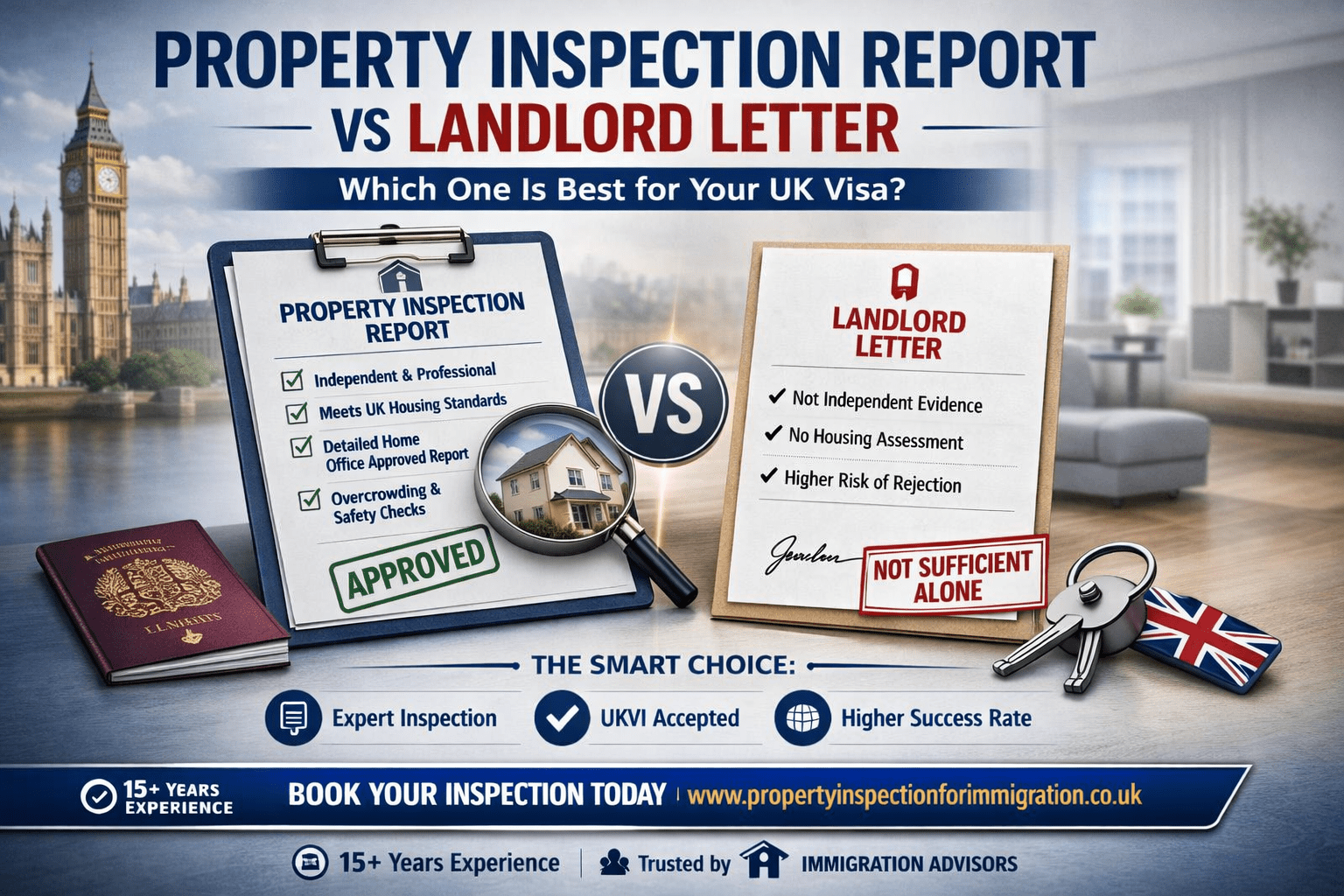
Property Inspection Report vs Landlord Letter: Why One Is Neutral, and the Other Isn’t
Property Inspection Report vs Landlord Letter: Why One Is Neutral, and the Other Isn’t
A landlord letter has a built-in problem that has nothing to do with how well it’s written: the person writing it has an interest in the outcome. They want the tenancy to continue, they generally want their tenant happy, and in many cases they’re a friend or family member of the applicant. None of that makes them dishonest, but it does mean their letter isn’t neutral evidence in the way a caseworker needs, and that’s the real distinction, more than detail or formality.
Who Benefits From a Landlord Saying “Yes, It’s Fine”?
Consider the incentives at play. A landlord confirming everyone can live there comfortably has no real downside to saying yes; refusing would mean an awkward conversation, lost rent, or a strained relationship. A landlord also generally isn’t trained to assess overcrowding standards, so “it looks fine to me” reflects their honest opinion, not a professional judgement. Compare that to an independent surveyor, who has no stake in the outcome either way, their only job is to measure and report accurately, whatever the result turns out to be.
What a Landlord Letter Can Usefully Confirm
- That you have permission to live at the property
- That your partner is also permitted to move in
- Basic details: address, occupants, and the nature of the arrangement
This is genuinely useful supporting information. It’s just not the same thing as an independent assessment of suitability.
What a Landlord Letter Can’t Assess
- Whether the property is overcrowded under the Housing Act 1985
- Whether room sizes actually meet space standard requirements
- Whether there are Category 1 or 2 hazards present
These require training and independence a landlord, by definition, doesn’t have, regardless of how well-intentioned or detailed their letter is.
A Case That Shows the Blind Spot Clearly
We inspected a property where the landlord was a close family friend of the sponsor, and had happily written a warm, detailed letter confirming the applicant was welcome to move in. The intention was completely genuine, but the letter didn’t mention that, once the applicant arrived, the property would have three adults sharing what was legally a two-person space under the Housing Act’s space standard. It wasn’t dishonesty; the landlord had no reason to think about overcrowding rules, because it wasn’t something he’d ever needed to consider. An independent inspection caught it before the application was submitted, giving the family time to address it rather than finding out from a caseworker after the fact.
Why This Matters More With Family or Friend Landlords
Ironically, a landlord letter from a close friend or relative can carry even less evidential weight in a caseworker’s eyes, not more; the personal relationship is precisely what raises the conflict-of-interest question. It doesn’t mean the arrangement is invalid, just that independent verification matters even more in these situations, not less.
What Actually Resolves This
A property inspection report solves the neutrality problem directly: the surveyor has no relationship with you, no stake in the outcome, and no reason to say the property is fine if it isn’t. That’s exactly why caseworkers weigh it so much more heavily than a landlord’s own assessment, however well-meaning.
Frequently Asked Questions
Can a landlord who’s a family member still write a valid permission letter?
Yes, for confirming permission to live there, but the closer the relationship, the more useful an independent inspection becomes to remove any doubt about neutrality.
Does it help if the landlord includes photos with their letter?
It can add some context, but photos from an untrained perspective still can’t confirm precise measurements or occupancy calculations the way a professional inspection does.
What if my landlord refuses to get involved at all? Does that block my application?
No, a property inspection report doesn’t require landlord cooperation beyond allowing access for the visit, so it can stand on its own even without a landlord letter.
Is a landlord reference letter the same as a landlord permission letter?
Not quite; a reference speaks to character or tenancy history, while a permission letter confirms occupancy rights. Neither assesses property suitability, which is the gap a report fills either way.
Do letting agents count differently from private landlords here?
Not meaningfully; a letting agent still isn’t an independent, qualified assessor of housing standards, so the same conflict-of-interest logic applies.
Remove the Doubt Entirely
An independent inspection has no stake in the outcome, which is exactly why it carries more weight than any letter, however well-intentioned, from someone who does.
Call our landline on 020 3488 4930 or mobile/WhatsApp on 07912 351 329.
See our Property Inspection Report for Spouse Visa page, our specialist service, or contact us to book.
More questions answered on our FAQs page.